One of ten selected for Creative Frontier, an invite-only AI storytelling masterclass at Columbia University's Digital Storytelling Lab, led by Google DeepMind's Matthieu Lorrain and Lance Weiler: advanced prompting, agent creation, ethics, and worldbuilding.
The Experience
A closed-door session with Google DeepMind's creative lead, a Sundance Lab pioneer, a New York immersive studio founder, an Ad Age AI marketing leader, and a poet-engineer from Google. Columbia normally restricts these sessions to students; Matthieu Lorrain opened ten guest seats.
Half discussion, half creation: we split into teams, built narrative worlds, generated storyboards with Gemini Pro 3, and animated sequences with Veo 3, blank page to moving image in one afternoon.
My team, Serena Connelly, Andrew Deutsch, Mary Anne Powers, and Leah Aguirre, took one seed idea to a finished world before the session ended.
The Takeaway
When content is infinite, vision, taste, and intent become the scarce resource.
Treat AI as a collaborator. It iterates instantly, but it cannot decide why something matters. That is still your job.
The Shift
Everyone has these tools now, so the baseline has risen. Standing out still takes vision, intent, and experimenting past the first output.
What We Covered
Advanced prompting, agent creation, multi-model workflows, and transmedial storytelling across text, image, video, and interactive media, plus where the industry is heading: systems that combine generation with reasoning.
Ethics ran through the whole conversation: IP and copyright, deepfakes, algorithmic bias, environmental cost, and creative identity in an age of infinite content.
Topics Covered
The Output: The Last Museum
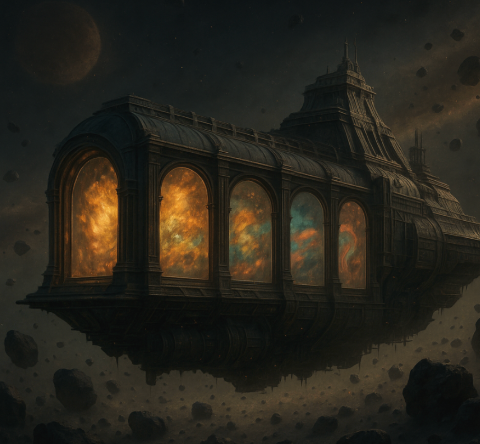
Each team built a narrative world from scratch with generative tools. Ours was The Last Museum, the final surviving fragment of Earth drifting through deep space as a floating museum.
Storyboards came from Gemini Pro 3, iterating on environments, characters, and compositions live. Key sequences were animated with Veo 3, all in a single session.
The Last Museum, AI-generated world-building prototype, Gemini Pro 3 + Veo 3
The Logline
“After surviving a fall through a wormhole, a lone explorer returns to where Earth should be, only to find a lethal debris field and a drifting vessel called The Last Museum. Desperate to learn what became of his family, he boards the ship and discovers that each chamber immerses him in uncensored memories from humanity's final days: joyful, terrifying, intimate, and unresolved. He pieces together a mosaic of humanity's collapse while the museum itself drifts closer to destruction.”
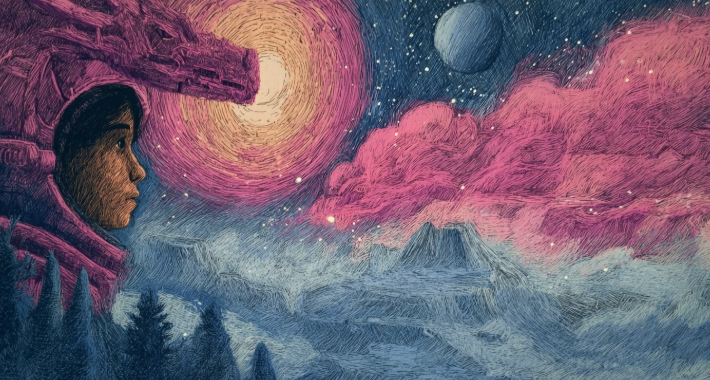
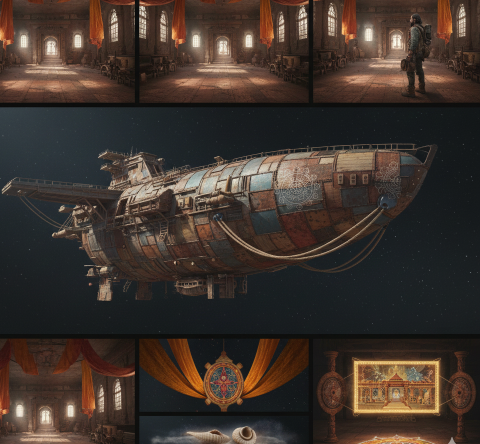
Concept Art
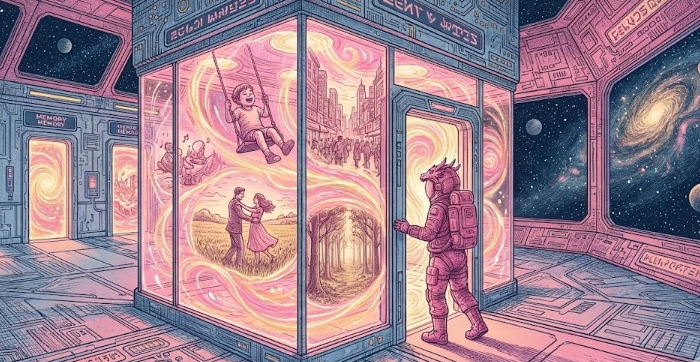
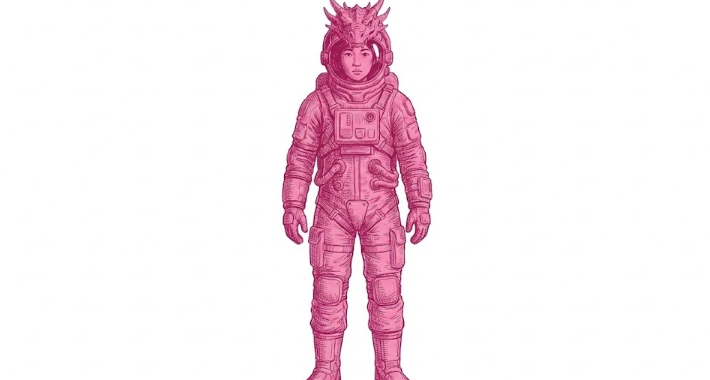
Generated with Gemini Pro 3 during the session: character design, ship exteriors, and memory-room interiors in a Western frontier meets ancient Indian temple look.
The Worldbuilding Process
The concept came out of the Six Thinking Hatsframework, with ChatGPT playing each hat in turn and questioning the team Socratic-style.
The seed: “a spaceship that serves as a museum of Earth, avoiding debris in the asteroid belt, populated by emotional memories and messages sent by humans to the stars.” Six rounds of questioning pushed it somewhere new each time.
What emerged: a museum where each exhibit pulls visitors into the raw, uncensored lived experience of another person. No filters, no curation, no safety mechanism.
Creativity
What kind of museum: a preserved archive, a chaotic collage, or rooms that shift with who remembers them?
Information
Whose memories fill it? Curated by archivists, donated by refugees, or collected automatically as Earth collapses?
Emotion
What should the audience feel most: awe, nostalgia, dread, hope, or something more complex?
Judgment
Could total immersion overwhelm, destabilize, or erase the visitor’s own identity?
Optimism
Best outcome: emotional immortality, empathy for a vanished species, or humanity’s final gift of connection?
Organization
Synthesized the ship, the memories, the emotional stakes, and the logline into one world.
The Aesthetic
No sleek sci-fi. The visual language fuses contemporary Western frontier with ancient Indian sacred architecture: mythic, tactile, spiritual.
The ship reads like a weather-beaten railroad car in space: wood grain, sun-bleached color, rope cables, and mandalas carved into the hull like Indian stone temples. Less tech, more relic.
Inside, frontier outpost meets ancient ashram: memory exhibits as small shrines, each dedicated to an emotion, clay-tile floors floating in weightlessness, marigold banners draped like temple fabrics.
The Concept: Emotion-Reactive Film
A film that emotionally reacts to the viewer. Each viewing surfaces different memories of humanity's final days, as if the museum senses the audience as much as the explorer.
The trailer never plays the same way twice: memories shift, emotions swap, scenes re-cut, mirroring the unstable archive inside.
Taglines
“Every memory changes you.”
“No two viewers see the same film.”
“Humanity's final message is how we felt.”
The Leaders
Five people building the future of AI and creativity, in a room of ten.
Matthieu Lorrain
Creative Lead, Google DeepMindDesigned and led the masterclass. Showed how DeepMind treats creativity as a design problem: tools guided by intention.
Lance Weiler
Founder, Digital Storytelling Lab & Sundance Screenwriting Lab AlumnusDecades of work where narrative meets emerging technology, treating stories as systems for memory and empathy.
Benjamin Benichou
Founder, 3.11LABSImmersive experience design from Mercer Labs and 3.11LABS. Grounded the group in spatial storytelling.
Alexia Adana
AI Marketing Leader, Ad AgeA critical lens on how brands and audiences are adapting to AI-generated content, focused on the human side of adoption.
Lauren Ducrey
Poet & ex-Google AI DesignerEngineer and poet. Showed how generative tools can serve artistic expression without flattening it.
The Cohort
The creatives and strategists in the room.
“AI gives us the skill to try new arts and styles that previously would have taken a lifetime to master. That shifts the question from ‘Can I make this?’ to ‘Now that I can make anything, what is actually worth making?’”
Creative Frontier, Columbia University, December 2025