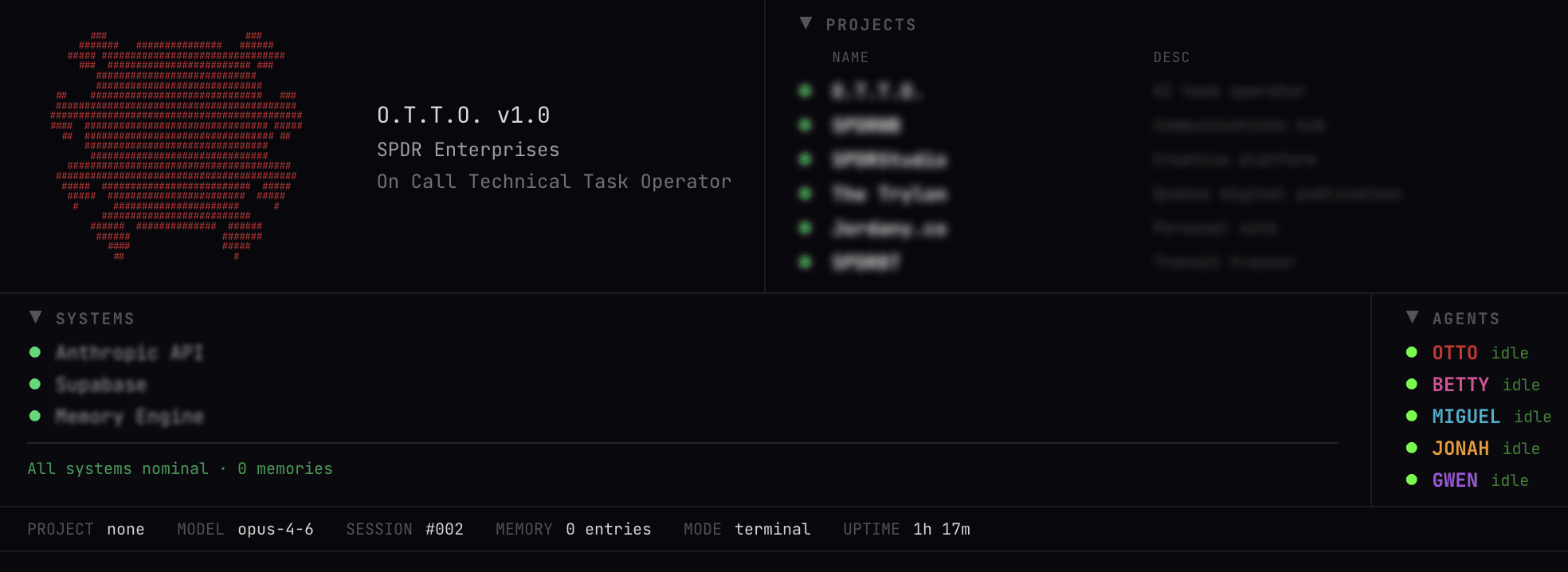
O.T.T.O.
Operational Technician & Tactical Observer: a persistent AI that grew from SPDRSNS (an AI journal) through SPDR (a Raspberry Pi body) and Clawdbot (local multi-model on a 3090) into a production assistant on smart glasses.
The Problem
AI Without Continuity
Every AI conversation starts from zero: no memory of yesterday, no awareness of your environment, no sense of your projects. You become the bridge between sessions.
Screens as Bottlenecks
The phone demands full attention: stop, pull out a device, type, wait, read. An assistant that augments you has to sit in your periphery instead.
SPDRSNS - The Web Brain
Building a Portable Intelligence
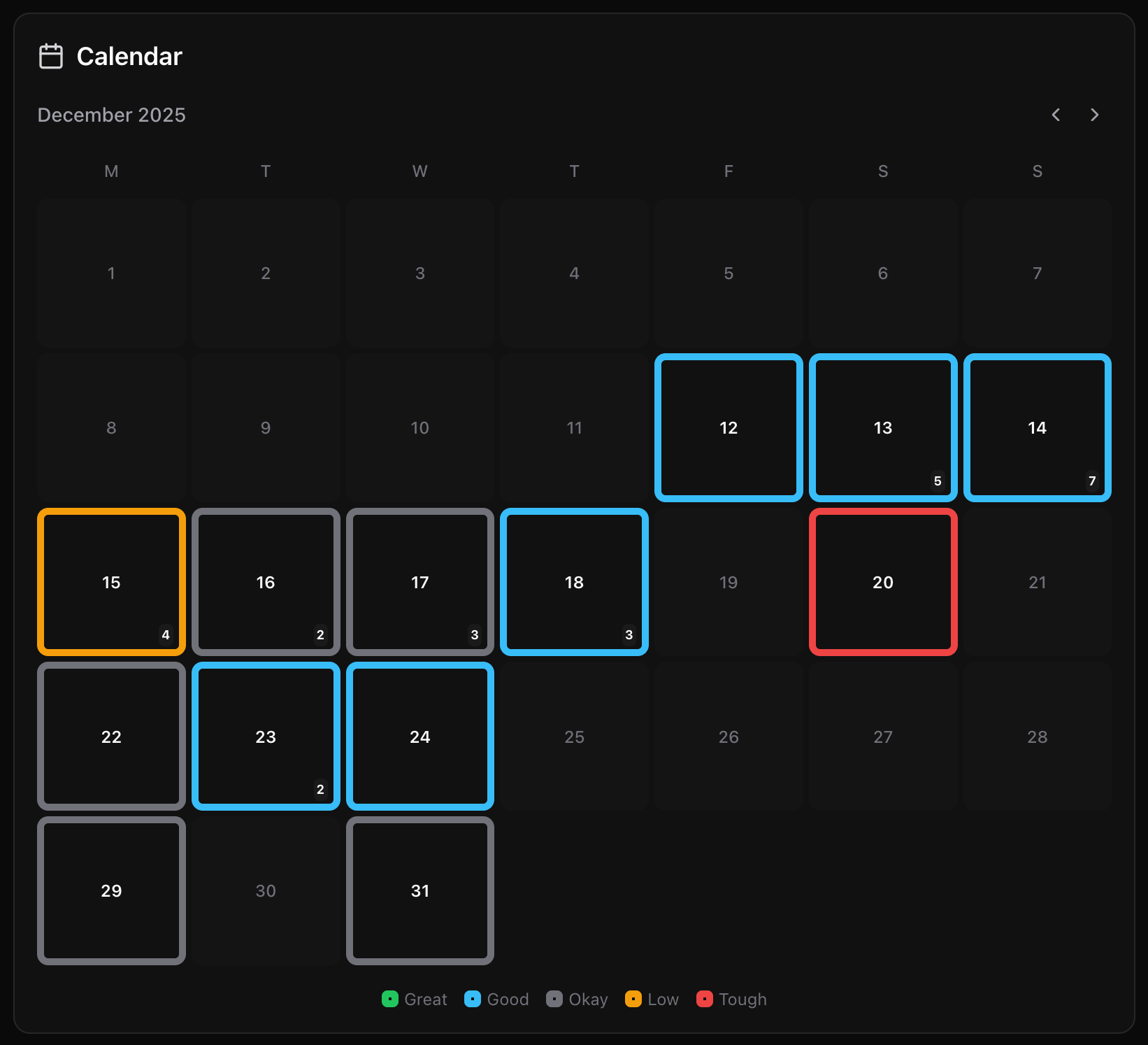
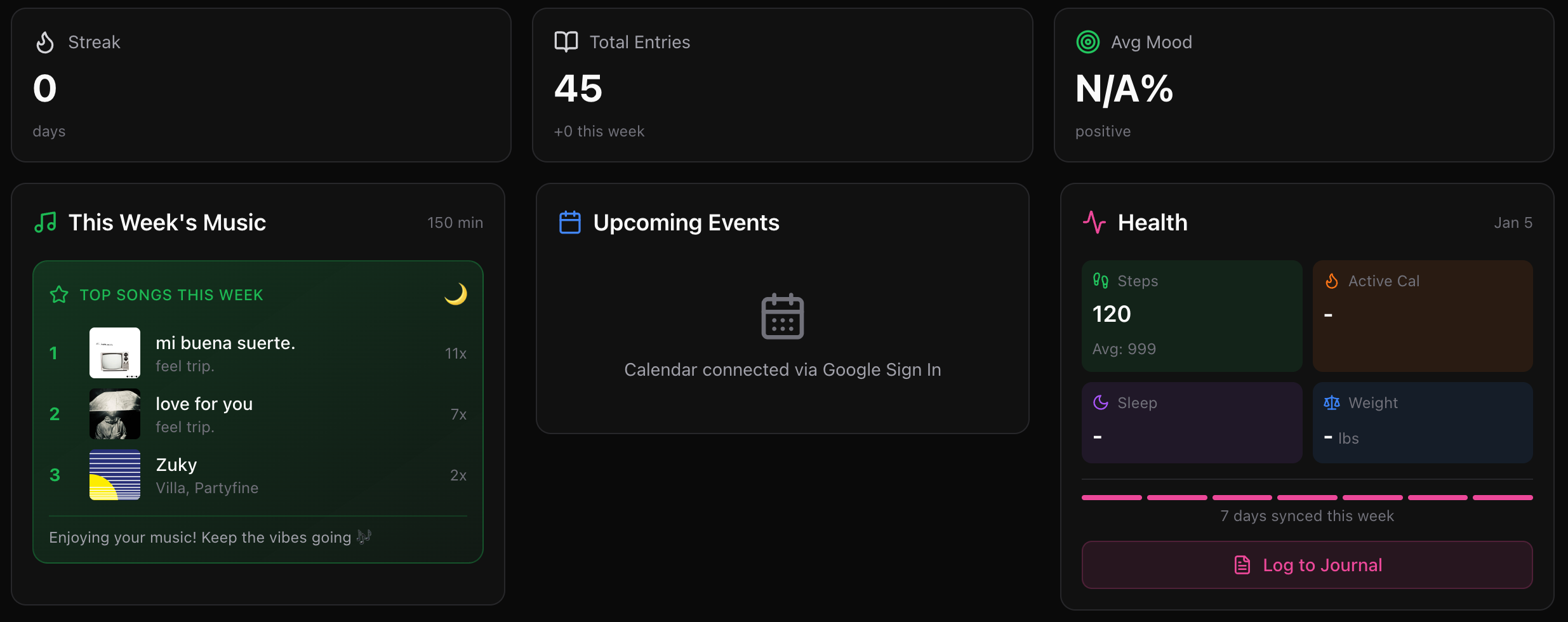
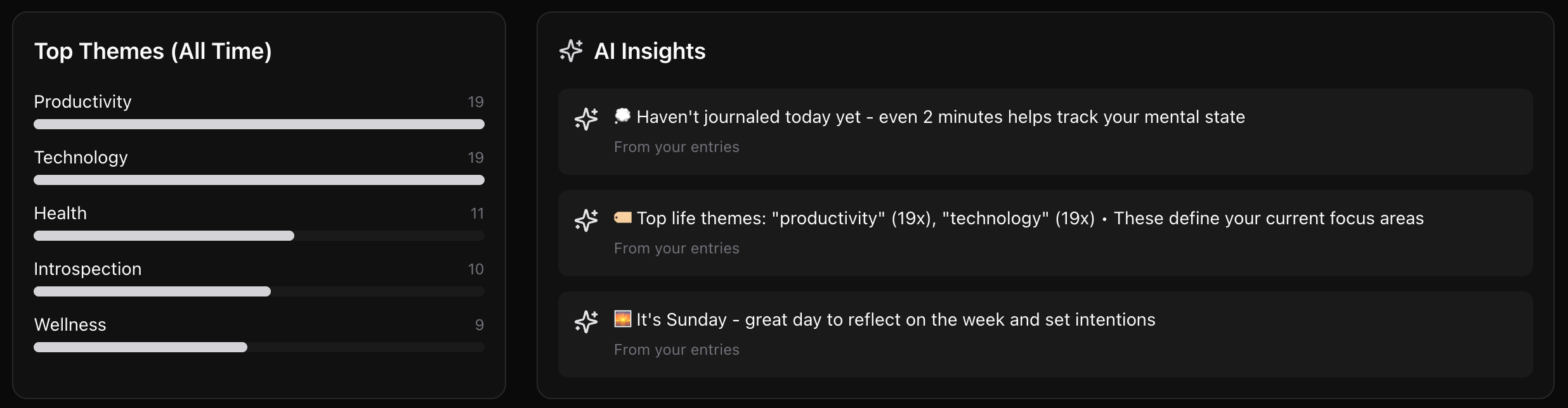
SPDRSNS (SPDR Sense) was a full-stack AI journal on Next.js 15 and Gemini 2.0 Flash. It ingested journal entries, wellness data, Spotify history, Google Calendar events, and health metrics and found patterns across them: mood trends, sleep correlations, music-to-emotion mapping. Everything lived in Supabase with pgvector embeddings for semantic search.
The thesis: a brain that knows your habits, health, work, music, and goals, owned entirely by you and portable across bodies. The same Supabase brain later ran a Raspberry Pi with a camera and microphone, then smart glasses.
What Was Built
- 01 AI journal with Gemini analysis: mood, themes, observations per entry
- 02 Semantic search via pgvector embeddings across all entries
- 03 Spotify, Google Calendar, and wellness data integration
- 04 Knowledge base with auto-extraction and spaced repetition
- 05 Goal tracking with AI-powered progress analysis
- 06 Multi-model fallback: Gemini primary, Claude and GPT as backup
Data Privacy
Every byte lives in a personal Supabase instance, not OpenAI's servers or Google's cloud. Journal entries, health data, conversation history, and knowledge graphs are self-hosted, and they travel with you when the body changes.
Stack
SPDR - Giving It a Body
V1: Wired
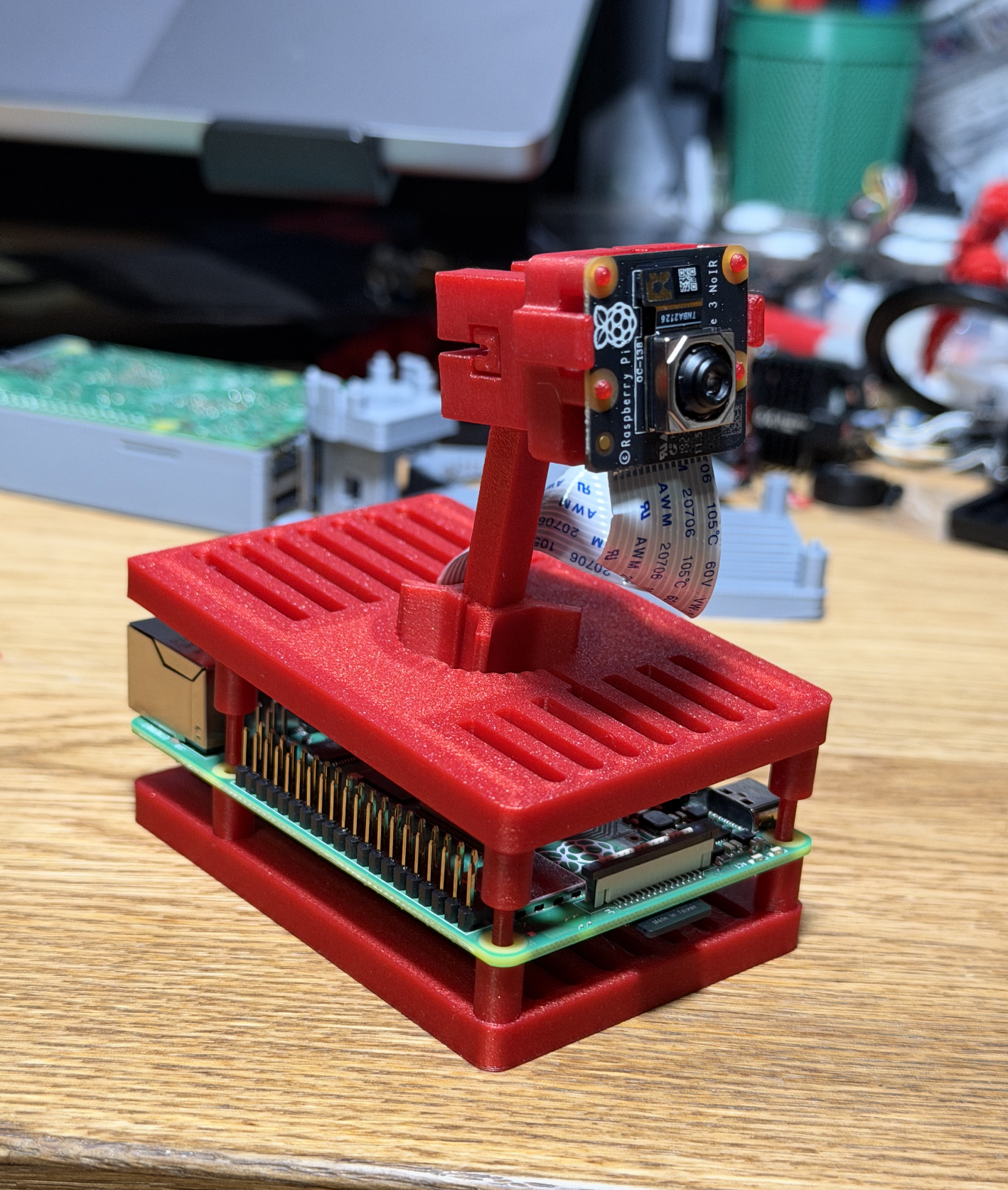
SPDR gave the brain a body: a Raspberry Pi 5 running 2,200+ lines of Python with Porcupine wake word (“Spider”, later “OTTO”), Whisper speech-to-text, pyttsx3 voice output, and a Pi camera. A 3D printed OpenSCAD enclosure housed it, and SPDRSNS served as its cloud brain, syncing observations back to Supabase.
It identified people by face, voice, body silhouette, and clothing color. A privacy engine with master, public, cautious, and locked modes controlled what it shared based on who was in the room. It pulled tasks from overheard speech, asked questions when idle, and streamed its camera to the dashboard. But it was tethered to the wall.
V2: Wireless
External batteries cut the cord. Same brain, same body, now portable: still a chunky dedicated box, but untethered, and proof that mobility mattered.
Hardware
- → Raspberry Pi 5 + Pi Camera
- → USB mic + speaker + LED ring
- → 3D printed enclosure (OpenSCAD)
- → External battery pack (V2)
Software
- → Porcupine wake word (“Spider”)
- → Whisper STT + pyttsx3 TTS
- → Face + voice + body recognition
- → Privacy engine (4 security modes)
- → Ambient learning + task detection
Clawdbot - Computer Use & Local Models
First Week Adopter
When Claude Computer Use launched as Clawdbot, I set it up the first week on a spare MacBook, fully sandboxed, with dedicated accounts and email addresses so it could operate without touching personal credentials. Each Anthropic update meant new capabilities to test.
Multi-Model, Local-First
Clawdbot ran on multiple models: Opus 4.5, Sonnet, Kimi K2.5, Qwen 3, and more. The breakthrough was running them all local on my PC with an NVIDIA RTX 3090: no cloud dependency for inference, full ownership of the data.
Models Running Local
All inference on NVIDIA RTX 3090 - zero cloud dependency
OTTO - The Best of Everything
All Learnings. One System.
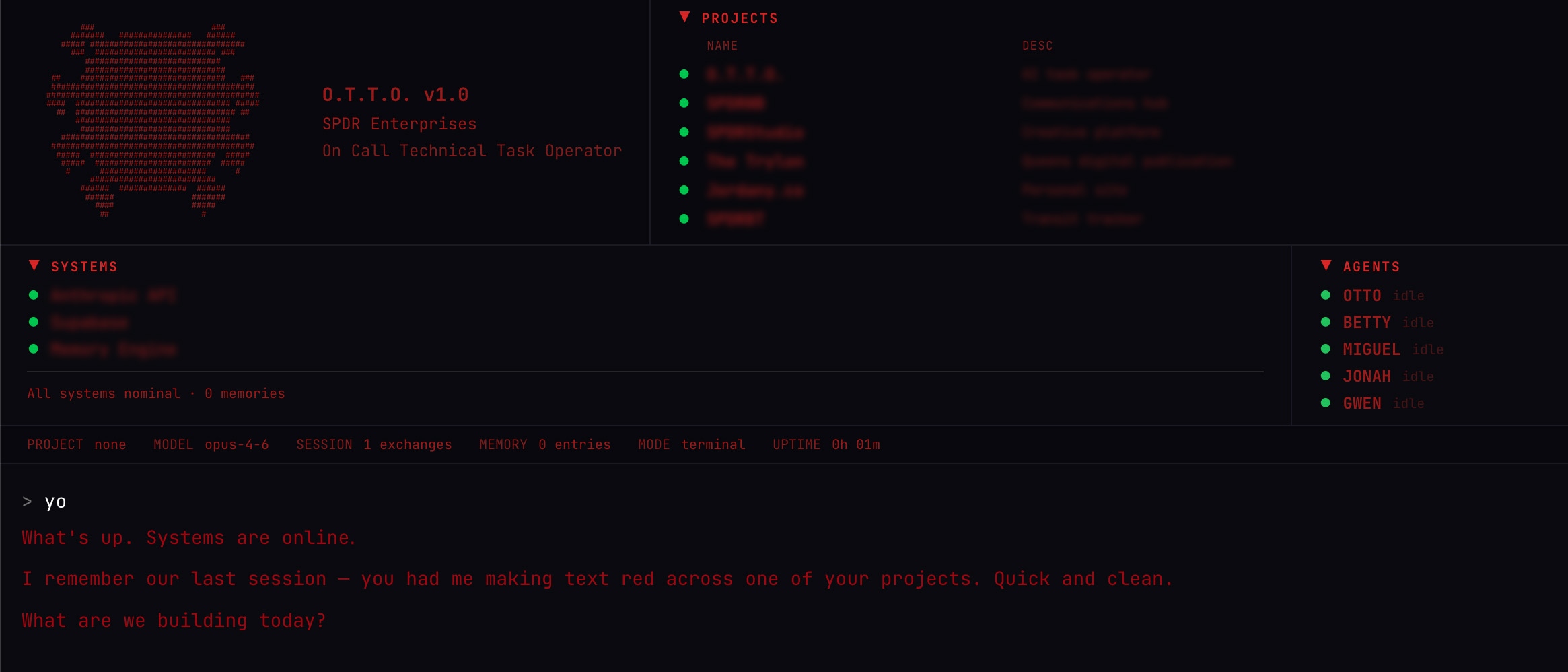
After extensive sandboxed testing, OTTO V4 was built on my personal PC, powered by Claude, combining the web app's persistent memory, the Pi's physical presence, and Clawdbot's multi-model local inference.
OTTO persists across sessions, building its own memory and database over time. It learns what I do, who I am, and how I work, and picks up where we left off.
Persistent Memory
Supabase-backed long-term storage for facts, visual observations, work logs, meeting transcripts, and preferences. Tell OTTO something once and it remembers across every session.
Multi-Model Intelligence
Gemini for vision, GPT-4o for conversation, Claude for reasoning, Llama for speed. Switch models on the fly by voice command.
SPDR Agent Network
Connected to the SPDR agent network, OTTO delegates research, code tasks, and scheduling to specialized agents, all reachable through a single voice.
Core Capabilities
Voice-First Interaction
Wake word activation, concise spoken responses, and conversation history that carries across sessions.
Spatial Vision
Camera for real-time scene understanding: photo capture, OCR for signs and menus, background visual memory. GPS-tagged observations stored to Supabase.
Live Translation
Point-and-read OCR with instant translation across 20+ languages: Japanese menus, Korean street signs, French documents, by voice command.
Persistent Memory
Facts, visual observations, work logs, and meeting transcripts stored across sessions. Tell OTTO your wifi password once and ask about it weeks later.
Local + Cloud Inference
Proven on local hardware (3090) and cloud APIs. Privacy when you need it, power when you want it, and control over where your data flows.
Agent Delegation
Delegates research, code generation, and scheduling to the SPDR agent network while OTTO stays focused on the physical world.
SPDR Lens - City Senses on Spectacles
The intent parser was written as a pure function so it could outlive the phone. The same commands now run as a native Snap Spectacles Lens, with flight, ferry, train, and bike radars drawn in glass in front of you.
On glasses you never see yourself, so the Lens tracks the person in front of you first: a 17-joint body skeleton with posture reads for arms up, T-pose, raised hand, and pointing. The wearer's own hands run alongside it, 23 joints each, classifying pinch, point, fist, open palm, and thumbs up.
In the Lens
- → Flight, ferry, train and bike radars in glass
- → 17-joint body tracking on the person in front
- → Posture reads: arms up, T-pose, raised hand, pointing
- → Wearer hand tracking, 23 joints per hand, 7 gestures
- → Same terminal design language, running on-device
Lens Studio + Spectacles
Evolution
SPDRSNS
FoundationFull-stack AI journal: Gemini analysis of entries, wellness data, Spotify, and calendar events, pgvector semantic search, auto-extracted knowledge base, goal tracking, multi-model fallback. The cloud brain everything else connected to.
SPDR - Wired
RetiredRPi 5 running 2,200+ lines of Python: 'Spider' wake word via Porcupine, Whisper STT, Pi camera, face and voice recognition, 4-mode privacy engine, ambient learning from overheard speech. 3D printed enclosure, SPDRSNS as cloud brain. Wired to the wall.
SPDR - Wireless
RetiredExternal batteries cut the cord. Same brain, same body, now mobile.
Clawdbot
EvolvedFirst week adopter of Claude Computer Use, sandboxed on a spare MacBook with dedicated accounts. Opus 4.5, Sonnet, Kimi K2.5, and Qwen 3 all running local on a 3090.
O.T.T.O.
ActiveBuilt on a personal PC after sandboxed testing, powered by Claude. Persistent across sessions, building its own memory and database. Connected to the SPDR agent network. Lives on glasses.
What's Next
Whole-Home Network
Standalone OTTOs throughout the house, replacing traditional smart assistants: every room gets a persistent AI that knows who you are and what you're working on.
Always-On Glasses
OTTO already lives on Even Realities G2s and Mentra Live. The glasses give it visual and spatial input: it sees what you see and goes where you go.
Virtual Body in AR
The first Spectacles build is live: SPDR Lens carries the radars into glass and reads the pose and gestures of whoever stands in front of you. Next is the body itself, a presence standing in your space.