Pijin
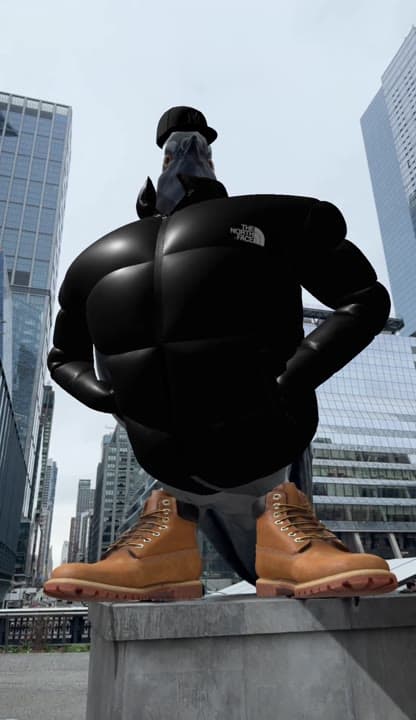
Site-specific WebAR on Niantic's Visual Positioning System, dressing the High Line's “Dinosaur” pigeon sculpture by Iván Argote in NYC streetwear: North Face puffer, Timberland boots, Yankees fitted, a single AirPod. No app, no QR code.
The Challenge
Most AR experiences rely on flat image targets or QR codes - constraints that limit spatial fidelity and break the illusion of digital objects existing in physical space. This project required something fundamentally different: a full 3D sculpture as the tracking anchor, centimeter-level alignment from any viewing angle, and persistent augmentation that holds as users walk a complete 360 degrees around the subject.
The technical bar was high. Visual Positioning System tracking demands a precise 3D map of the physical environment, real-time camera localization against that map, and dynamic occlusion so digital objects appear to exist behind physical geometry. All of this needed to run in a mobile browser with zero friction - no app store, no download, no login. Just a URL and a camera.
The Subject
The “Dinosaur” pigeon sculpture by Iván Argote on the High Line in Hudson Yards - the physical anchor that the entire AR experience is built around. This 4K drone scan captures the sculpture and its surrounding environment for VPS mapping.
How It Works
Scan & Localize
The user opens a URL and points their camera at the physical sculpture. Niantic Lightship VPS recognizes the geolocation and matches the live camera feed against a pre-built 3D mesh of the environment - localizing the device with centimeter-level precision.
Anchor Alignment
Digital content is precisely anchored to the physical sculpture's geometry. Unlike flat image tracking, VPS alignment is volumetric - the AR layer wraps around the actual 3D contours of the pigeon, maintaining spatial accuracy from every viewing angle.
Sequential Transform
The Pijin is outfitted piece by piece with signature NYC streetwear - Timberland boots first, then the North Face puffer jacket, Yankees fitted cap, and finally the single AirPod. Each accessory is mesh-fitted to the sculpture's body for anatomically correct placement.
360-Degree Interaction
Users walk freely around the sculpture while the AR layer holds position. Environmental lighting estimation matches digital shading to real-world conditions, and dynamic occlusion ensures the streetwear appears to wrap naturally around the bird's physical form.
Build Process
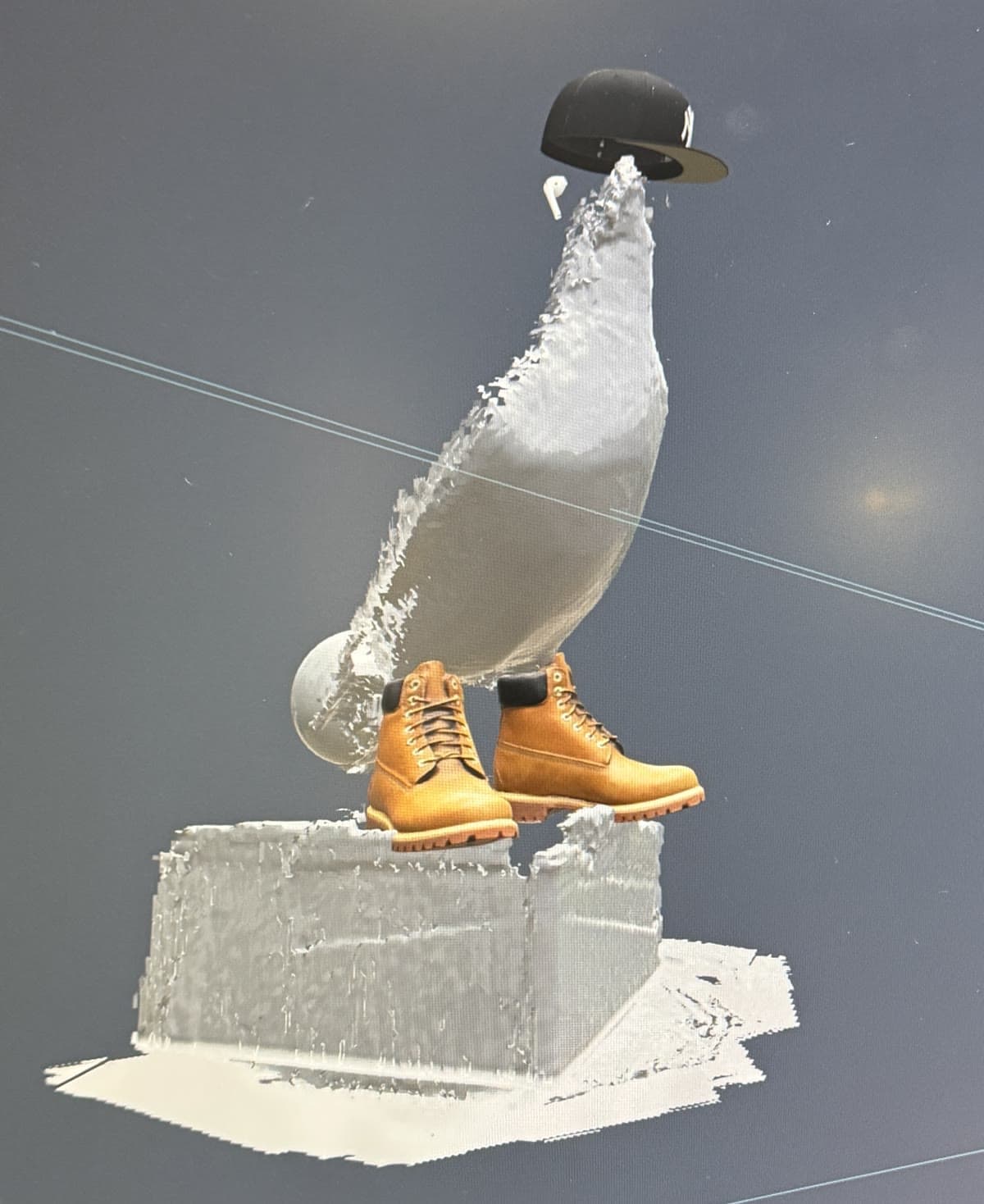
Point Cloud + Accessories
Gaussian splat scan of the physical sculpture with digital accessories positioned in 3D space. Each item - Yankees cap, AirPod, Timberland boots - is anchored relative to the scan geometry so spatial alignment holds regardless of camera angle or distance.
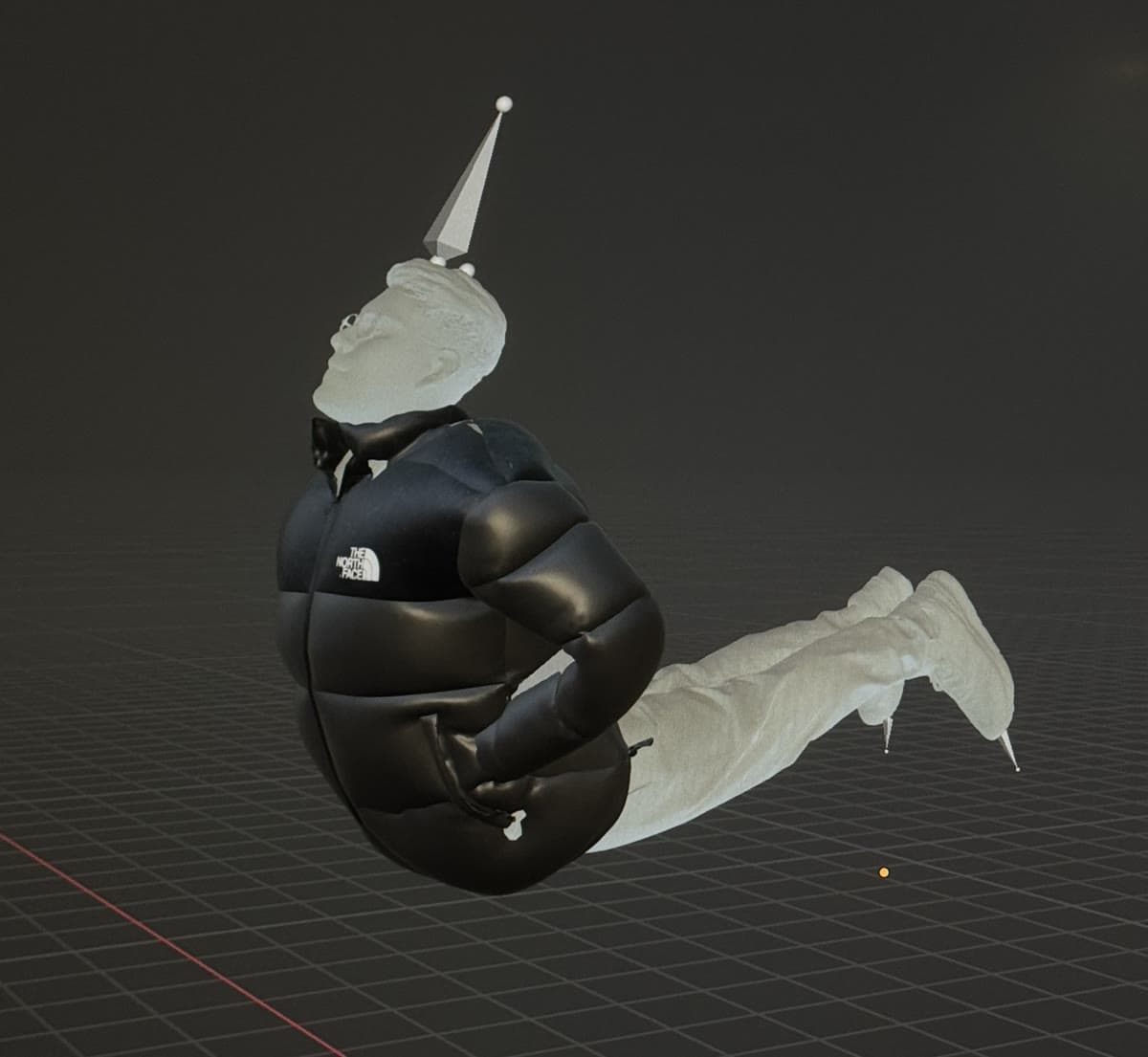
Puffer Jacket Modeling
The North Face puffer jacket modeled in Blender and custom-fitted to the pigeon's body. Cloth simulation combined with manual sculpting achieved the quilted, volumetric silhouette that wraps convincingly around the bird's round form - critical for maintaining believability in AR.
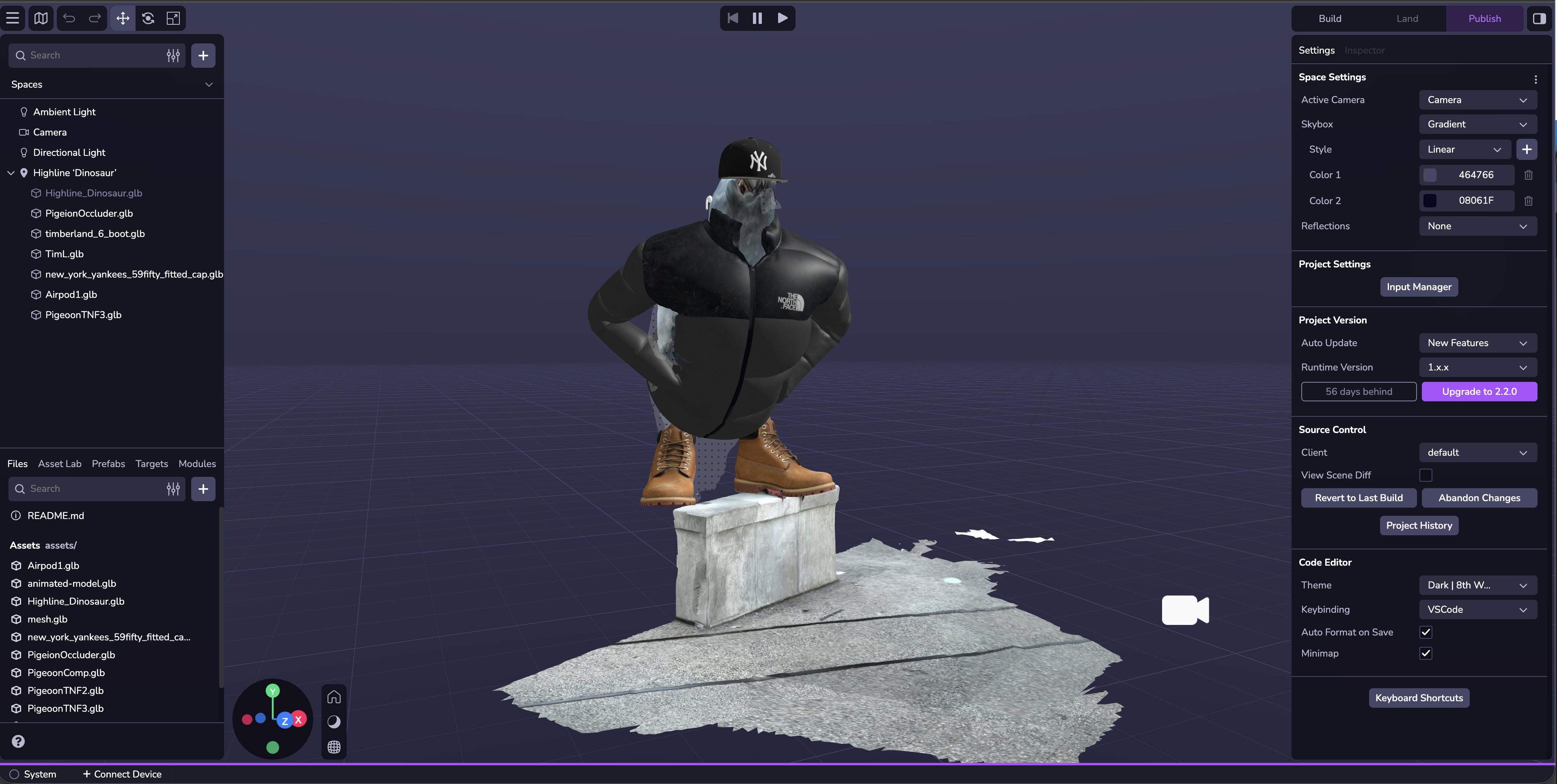
8th Wall Scene
The fully dressed pigeon staged in the 8th Wall WebAR editor, all accessories positioned, lighting dialed, ready for VPS deployment to the High Line.
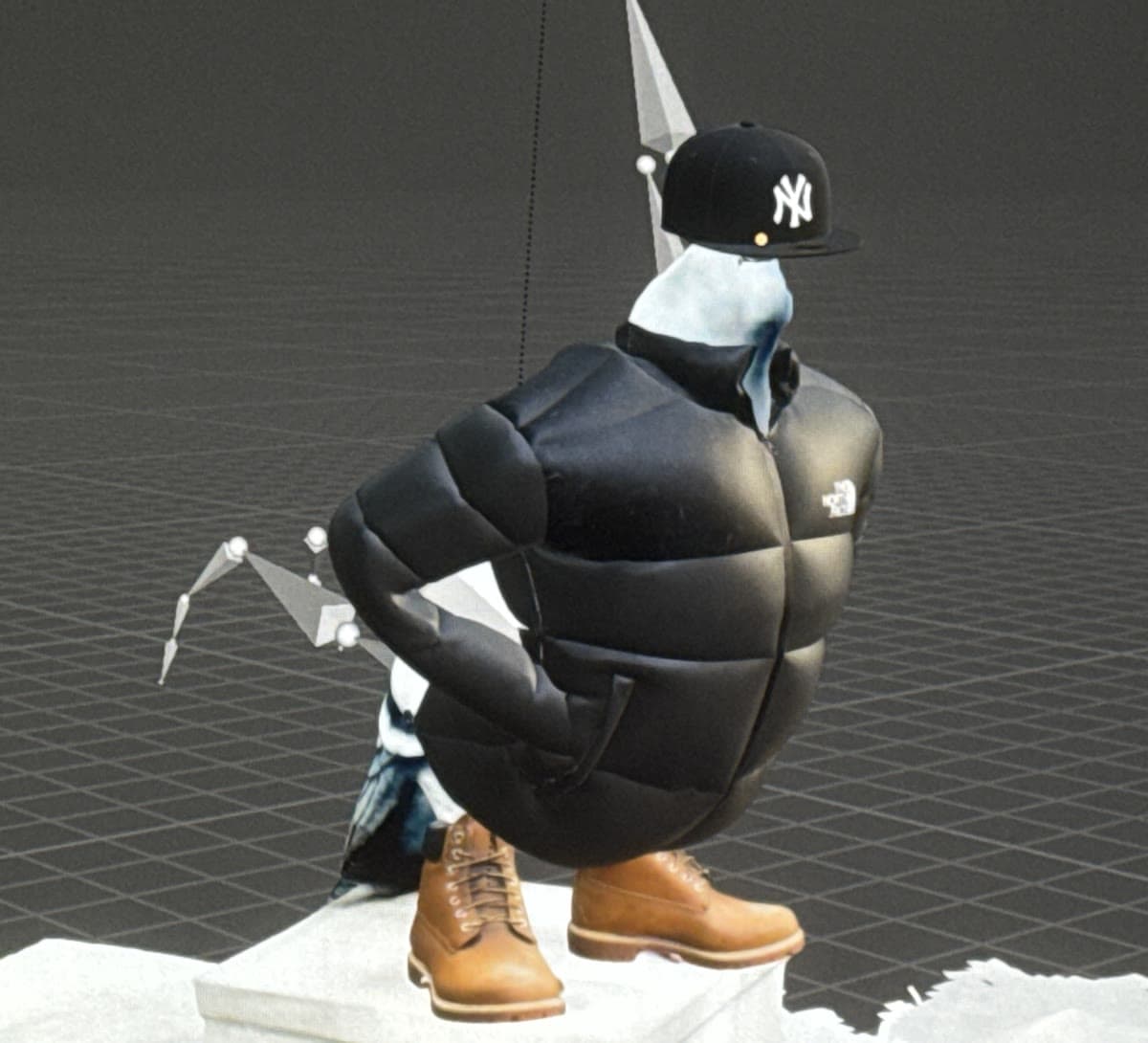
Full Outfit Assembly
The complete streetwear look assembled on the 3D scan - black North Face puffer, Yankees fitted cap, and Timberland boots. Every accessory is mesh-anchored to the sculpture's geometry, ensuring the outfit holds spatial coherence from any viewing angle in the final AR experience.
Final Result
AR Demo
Final AR composite - the fully dressed pigeon anchored to the physical sculpture on the High Line, NYC skyline behind it. VPS tracking holds the digital layer in place as the camera moves freely.
Field Test
On-site validation at the High Line - the full AR experience running live on a mobile device with real foot traffic, confirming VPS stability and visual fidelity under real-world conditions.
Technical Architecture
VPS Localization
Niantic's Visual Positioning System builds a persistent 3D map of the physical environment using point cloud data from the sculpture and its surroundings. At runtime, the device's camera feed is matched against this map in real-time, achieving sub-centimeter positional accuracy without any physical markers, QR codes, or image targets. This is the same spatial computing infrastructure that powers large-scale AR at Niantic.
Dynamic Occlusion
A transparent “occluder” mesh of the sculpture was generated from the scan data. This invisible geometry masks digital objects at the correct depth - so the puffer jacket appears to wrap around the pigeon rather than floating in front of it. Without this layer, the illusion of physical presence breaks down entirely.
Environmental Lighting
Real-time lighting estimation samples the ambient conditions of the High Line at the moment of viewing - sunlight direction, intensity, color temperature - and applies those parameters to the digital materials. The puffer jacket reflects actual environmental light, making the AR layer indistinguishable from the physical scene at a glance.
Zero-Friction Delivery
The entire VPS tracking pipeline, 3D rendering engine, and occlusion system runs directly in the mobile browser via 8th Wall - no app download, no account creation, no installation. This is a deliberate architectural choice: friction is the primary enemy of experiential AR, and every barrier between user and experience reduces engagement.